



Cancer Is Getting Younger
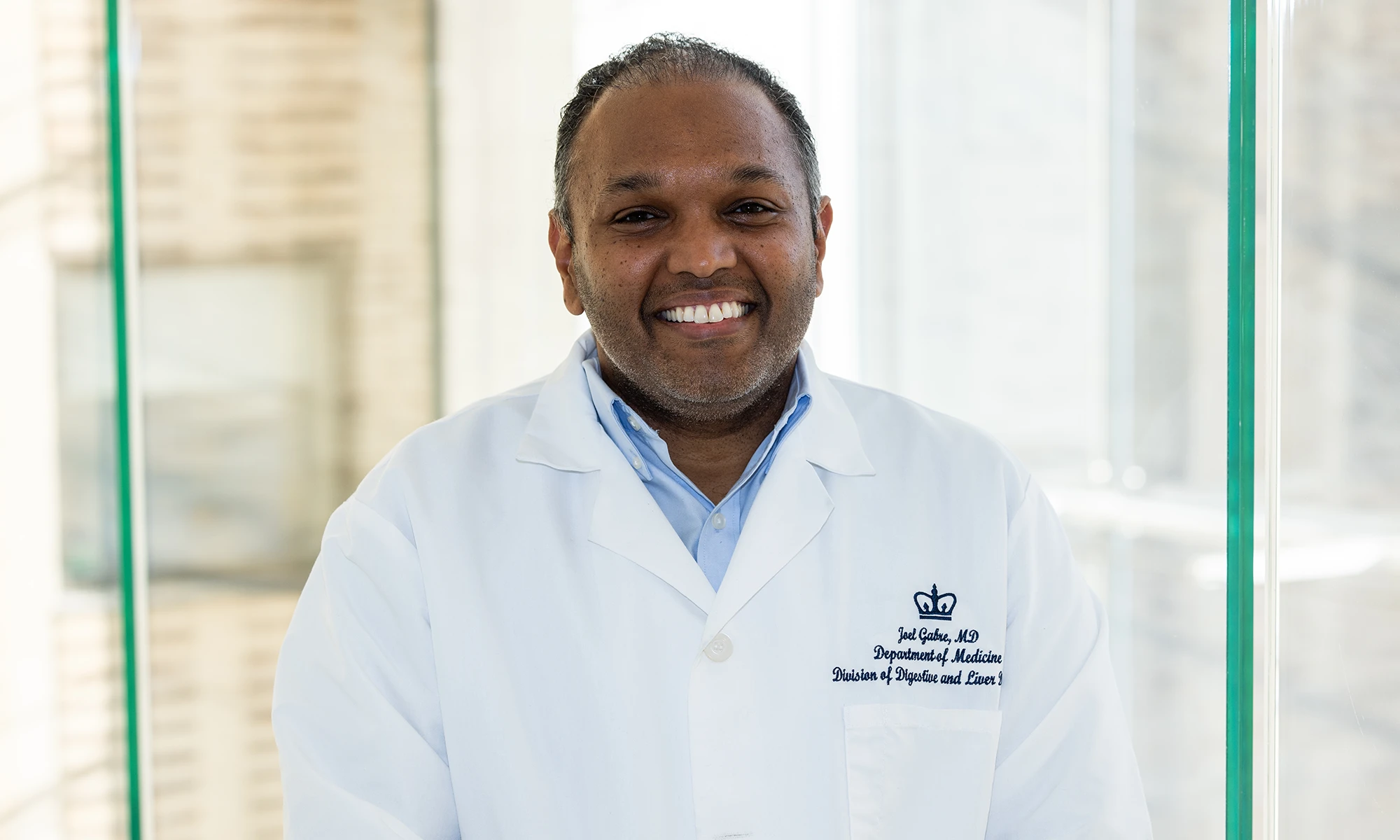
“That phone call, I will not forget,” recalls Dr. Gabre, a gastroenterologist at NewYork-Presbyterian/Columbia University Irving Medical Center. “There was just silence on the other end because I had completely changed their life. It was shocking, scary—and as a scientist, my first thought was: why? Why is this happening?”
A Growing Crisis
Increasingly, younger adults are being diagnosed with cancer. A recent report from National Cancer Institute researchers found that rates of fourteen different cancers are rising among people under 50—what experts now call “early-onset” cancers. The steepest increases are in colorectal and breast cancer.
Breast cancer is the most common cancer among adults under 40 and has seen the largest increase in early-onset diagnoses over the last decade. Colorectal cancer incidence in adults under 50 has risen nearly 2% each year since the mid-1990s, and within the next decade, it’s projected that one in ten new colorectal cancers will be in this younger age group.
“This trend is extremely worrying,” says Dr. Gabre. “What’s even more concerning is that it seems to be accelerating. People born as recently as the 1990s are more likely to get colorectal cancer at an earlier age than those born before. We call this the birth-cohort effect—it means something has changed across generations.”
Why Are More Young People Getting Cancer?
Researchers are working across disciplines to answer that question. “It’s not one smoking gun,” Dr. Gabre says. “It’s likely a multitude of factors that together can raise risk.”
For years, many assumed that rising obesity rates were to blame. But newer research suggests a deeper driver: ultra-processed foods, altered gut microbiomes, and more sedentary lifestyles. “Obesity may not be the cause,” Gabre explains. “It may just be another symptom of the same underlying shifts in how we eat and live.”
Columbia epidemiologist Rebecca Kehm, PhD, is uncovering how early life exposures—nutrition, hormones, and activity levels—might shape risk decades later. In a recent study published in Cancer Epidemiology, Biomarkers & Prevention, Dr. Kehm and her colleagues analyzed data from more than 26,000 women across the U.S., Canada, Australia, and New Zealand. They found that women who were physically active between ages 12 and 34 had a 20% lower risk of developing breast cancer before age 40 compared with less active peers.
“Early lifestyle choices have enduring consequences,” says Dr. Kehm. “Prevention may need to begin far earlier than we once thought.”
Her work builds on decades of research showing that exercise regulates estrogen, reduces chronic inflammation, and limits oxidative stress—all processes that, when unchecked, can fuel tumor growth. But Dr. Kehm’s data suggest that adolescence and young adulthood are especially critical windows. “Puberty is a time when estrogen levels fluctuate dramatically,” she explains. “Regulating those levels through physical activity may be key to lowering lifetime risk.”
Meanwhile, Lauren Houghton, PhD, is investigating how hormonal and reproductive factors might contribute to early-onset breast cancer—and how they could be used to identify those most at risk. In a recent invited commentary titled “Menstruation as the Next Vital Sign,” she highlights a troubling trend: the first U.S. cohort of women to begin menstruation at age 12½ are now seeing a rise in early-onset breast cancer. Those born between 2000 and 2005, she notes, are at 20% higher risk because they are the first generation to reach menarche before age 12. “By 2033, we may see a markedly higher incidence of early-onset breast cancer,” Dr. Houghton warns. “Clinicians should be asking about menstrual health as part of understanding underlying cancer risk.”
Dr. Houghton and her colleagues are also exploring whether hormone profiles could serve as early warning signs of breast cancer. In recent studies, her team measured estrogen, progesterone, and androgens—hormones typically labeled “male,” but present in women as well—alongside stress-related glucocorticoids. The results suggest that elevated androgens and stress hormones may be linked to higher breast cancer risk.
“We’re now thinking about how to use these hormones as biomarkers for early detection—helping to close the gap before standard screening even begins,” says Dr. Houghton.
“Most studies on cancer risk have focused on exposures that accumulate across adulthood,” adds Dr. Kehm. “We’re only beginning to understand how factors in childhood and adolescence may influence cancer later in life.”
- Assistant Professor of Medicine, Columbia University Irving Vagelos College of Physicians & Surgeons
- Member, Precision Oncology and Systems Biology Program, Herbert Irving Comprehensive Cancer Center
- Assistant Professor of Epidemiology, Columbia University Mailman School of Public Health
- Member, Cancer Population Science Program, Herbert Irving Comprehensive Cancer Center
- Assistant Professor of Epidemiology, Columbia University Mailman School of Public Health
- Member, Cancer Population Science Program, Herbert Irving Comprehensive Cancer Center
Peering Into the Cell
While population studies provide a broad picture, Dr. Gabre is digging into what happens at the cellular level. His lab uses single-cell RNA sequencing and Columbia’s novel computational tool, VIPER (Visualization Pipeline for RNA-Seq), to examine each cell inside a tumor. “We wanted to answer a simple but critical question: are early-onset colorectal cancers biologically different from late-onset tumors?” he says. “By looking at each cell, we can see the unique makeup of these cancers.”
The findings have been surprising. “We expected early-onset tumors to be immune-cold, lacking immune cells,” Dr. Gabre explains. “Instead, they looked similar to late-onset tumors in that regard—but we found more fibroblasts, which can promote tumor growth, and epithelial cells expressing inflammatory markers, particularly TLR4. That receptor is linked to inflammatory bowel disease and can be activated by both bacteria and saturated fats.”
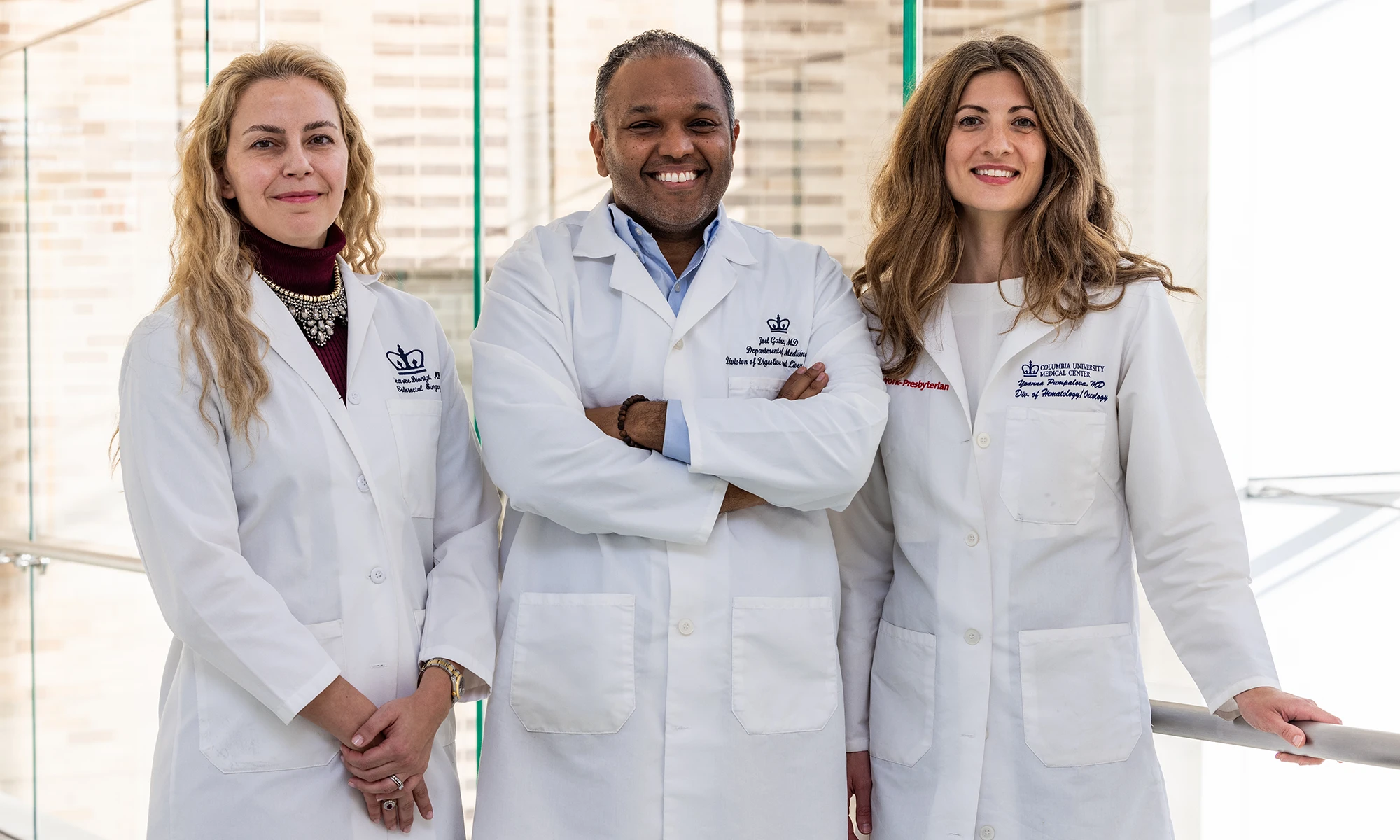
These insights, he says, point toward a link between diet, inflammation, and cancer. In a study with Yoanna Pumpalova, MD, and Beatrice Dionigi, MD, FACS, FASCRS, Dr. Gabre builds on prior evidence connecting ultra-processed foods to colorectal cancer. The team found that excessive consumption of fatty acids common in highly processed foods—like soybean, corn, and sunflower oils—can disrupt the gut microbiome, ignite inflammation, and damage DNA.
“Excessive fat in the body may amplify these processes,” says Dr. Gabre, “but obesity itself doesn’t seem necessary for early-onset colon cancer to develop—or even to be the primary driver.”
This theory may explain why many young and otherwise healthy patients are being diagnosed. “I’ve operated on marathon runners, ballet dancers, and people who don’t drink, smoke, or eat red meat,” says Dr. Dionigi. “It suggests that harmful dietary patterns in early childhood may inflict lasting damage, even for those who later live healthy lives.”
- Assistant Professor of Medicine, Columbia University Irving Vagelos College of Physicians & Surgeons
- Assistant Professor of Surgery, Columbia University Irving Vagelos College of Physicians & Surgeons
A New Model for Care and Research
To confront this crisis, Drs. Gabre, Dionigi, and Pumpalova launched the Early Onset Colorectal Cancer Program at Columbia and NewYork-Presbyterian in 2024. The clinic provides patients with comprehensive, coordinated care while directly linking them to ongoing research.
Instead of seeing specialists across multiple visits, patients meet with gastroenterology, oncology, surgery, and genetics teams in a single, streamlined appointment.
“Patients see both a surgeon and an oncologist in the same visit, which helps alleviate confusion and streamlines their treatment journey,” explains Dr. Dionigi. This gives patients the ability to make care decisions quickly, and a coordinated approach that helps them start their treatment right away.
At their first visit, they meet with Drs. Dionigi and Pumpalova, leave with a coordinated treatment plan, and are invited to contribute to research. Tissue samples from surgery go to Dr. Gabre’s lab for sequencing and organoid development—miniature tumor models that allow scientists to study growth patterns and test new therapies.
This close feedback loop—between clinic and lab—also accelerates discovery. “When we learn something new in the lab, we can think about how to apply it to our patients,” says Dr. Gabre. “And when we see something unusual in the clinic, it helps guide our research questions.
Catching Cancer Earlier
The next frontier, Dr. Gabre says, is prevention. “If we can identify biomarkers in blood or stool that reflect these inflammatory patterns, we could target screening to those most at risk,” he explains. “Imagine being able to identify a 35-year-old who should get a colonoscopy not only because of family history, but because their biology tells us they’re at higher risk.”
Dr. Kehm agrees that earlier, more individualized screening is essential. “We can’t wait until someone turns 45 or 50 to start thinking about cancer risk,” she says. “By then, many early-onset cancers have already developed. What we’re learning from population data is that prevention needs to start decades earlier—during adolescence and young adulthood—when biology and behavior are both still malleable.”
That vision is already taking shape at Columbia. Across the cancer center, researchers are integrating imaging, molecular, and population data to better understand cancer risk and catch disease earlier. Teams like the Center for Innovation in Imaging Biomarkers and Integrated Diagnostics (CIMBID), led by Despina Kontos, PhD, are developing ways to combine imaging biomarkers, genetics, and environmental data. The goal is to use all of this information together—to understand individual risk and identify cancer long before symptoms appear.
“We’re at a moment where population science and molecular biology are finally converging,” says Dr. Gabre. “By linking what we see in people’s daily lives to what’s happening in their cells, we can intervene sooner and make cancer prevention far more precise.”
The Power of Team Science
None of this, Dr. Gabre emphasizes, happens in isolation. “I work with extraordinary oncologists, surgeons, and computational scientists,” he says. “This is a team-science approach. It’s the collaboration that allows us to take patient samples, apply new technologies, and start answering these big questions.”
Dr. Pumpalova notes that integrating lab and clinical research is vital to moving forward. “We can’t treat what we don’t understand,” she says. “Our patients want answers—and by linking their care to research, we’re helping generate the data that could lead to earlier detection and, eventually, prevention.”
As cases of early-onset cancer continue to rise, Columbia’s investigators are racing to stay ahead of the trend—bringing together epidemiology, biology, and clinical innovation to understand why cancer is striking earlier, and how to stop it.
“We’ve made important first steps,” says Dr. Gabre. “But there’s still so much to learn—about why this is happening, how we can detect it earlier, and ultimately, how we can prevent it.”
- Assistant Professor of Medicine, Columbia University Irving Vagelos College of Physicians & Surgeons
- Member, Precision Oncology and Systems Biology Program, Herbert Irving Comprehensive Cancer Center
- Assistant Professor of Epidemiology, Columbia University Mailman School of Public Health
- Member, Cancer Population Science Program, Herbert Irving Comprehensive Cancer Center
- Assistant Professor of Epidemiology, Columbia University Mailman School of Public Health
- Member, Cancer Population Science Program, Herbert Irving Comprehensive Cancer Center
- Assistant Professor of Medicine, Columbia University Irving Vagelos College of Physicians & Surgeons
- Assistant Professor of Surgery, Columbia University Irving Vagelos College of Physicians & Surgeons